Context
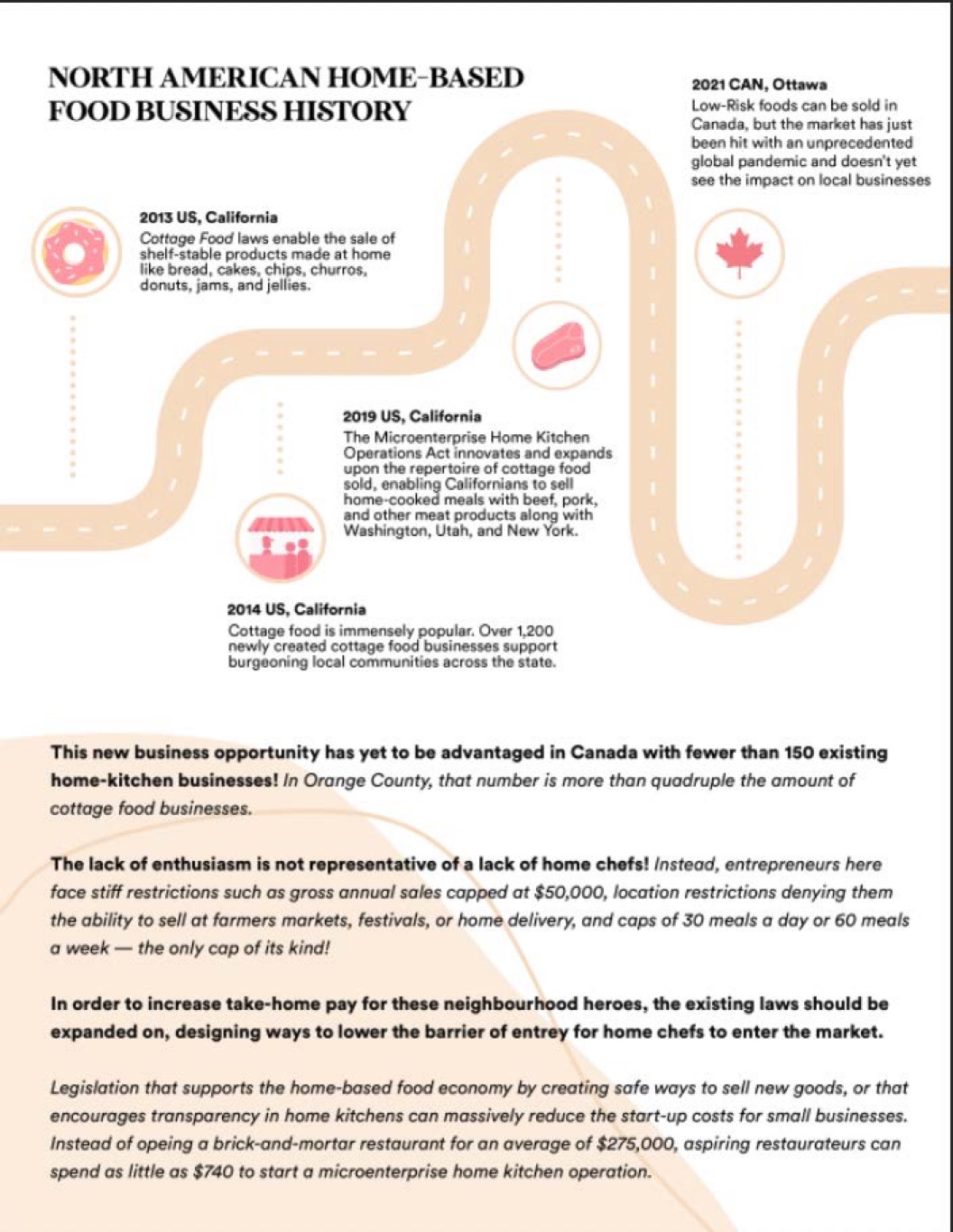
In 2021, Ontario's updated food premises regulations allowed home kitchens to sell "low-risk" foods such as baked goods, jams and preserves. California had gone much further: its 2019 Microenterprise Home Kitchen Operations Act let residents sell full home-cooked meals.
The gap was striking. Our research found fewer than 150 home-kitchen businesses in Canada, while starting one could cost as little as $740, compared with an average of $275,000 for a brick-and-mortar restaurant. Many talented home cooks were already selling informally, outside any safety framework.
Objective
Build a trusted platform where certified home cooks could sell meals to their neighbourhood legally and safely, and work with the province to widen what home kitchens are allowed to sell.
My responsibilities
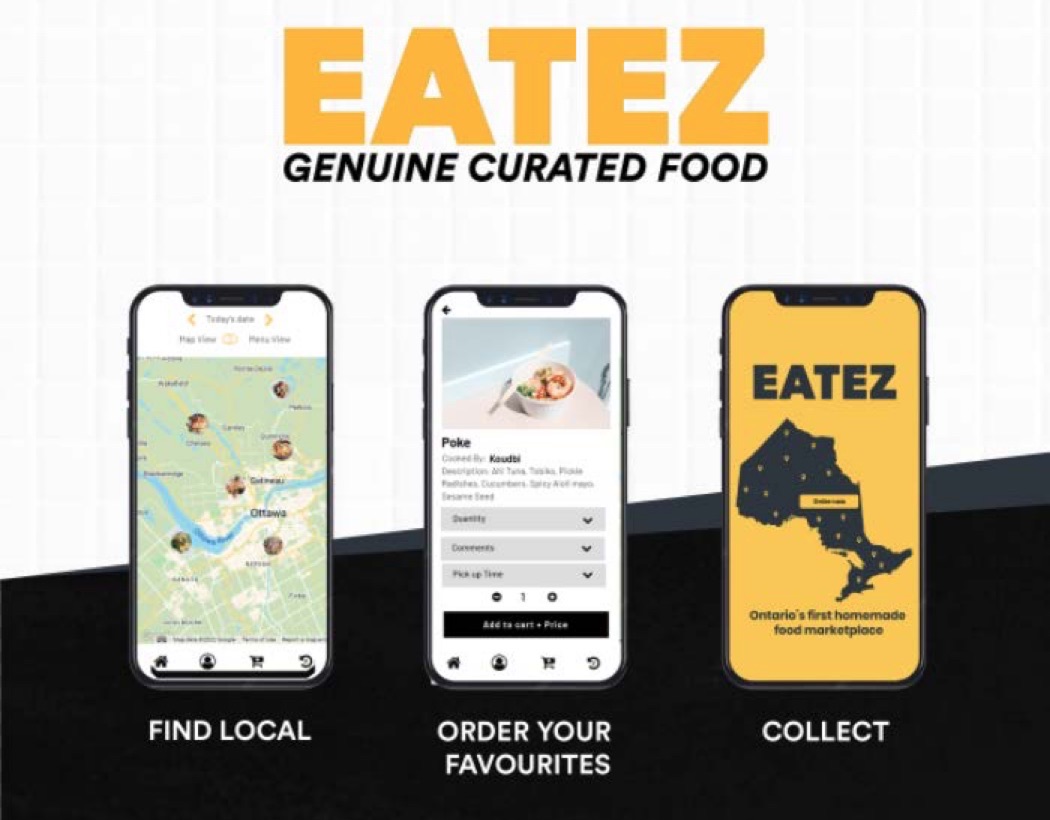
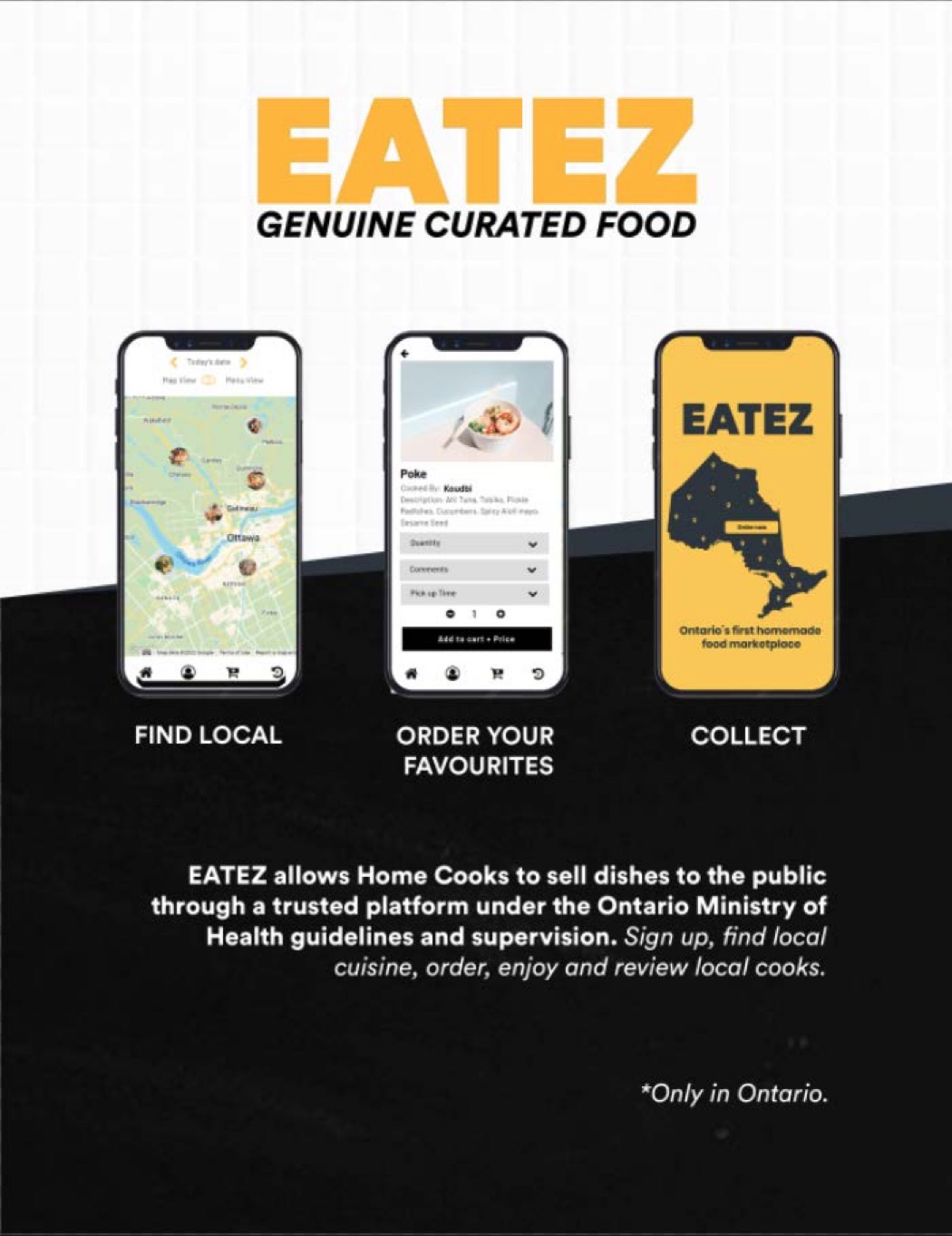
- Product ownership: owned the product vision and the core user flow (find local, order, collect) for a two-sided marketplace.
- Vendor and team management: hired remote developers through Toptal and directed the build in FlutterFlow.
- Agile delivery: managed the roadmap, epics and user stories in Zoho Sprints and ran the team in two-week sprints: planning, review and backlog refinement.
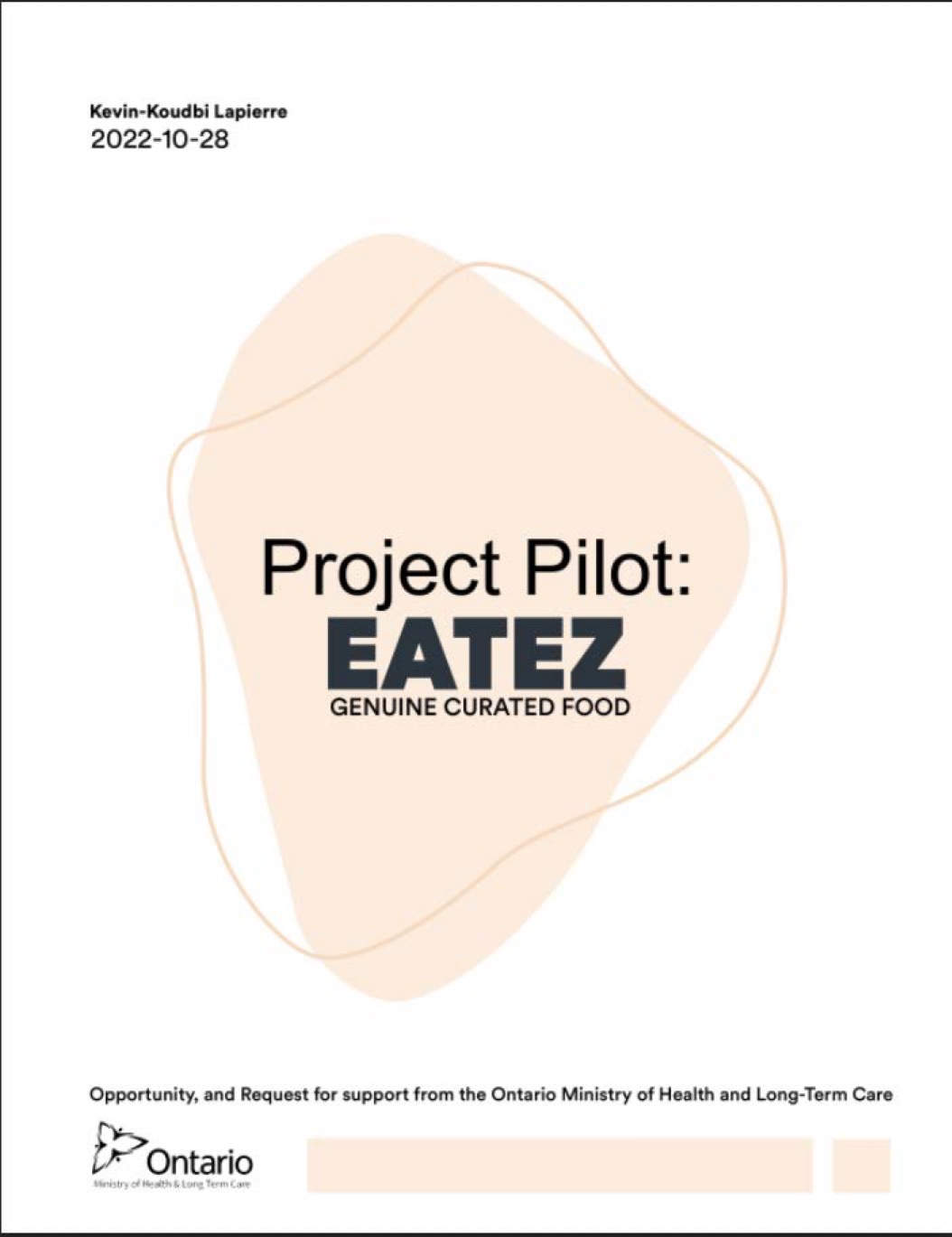
- Regulatory and feasibility analysis: researched Ontario's rules for home-based food businesses, and wrote and submitted a pilot-project proposal to the Ministry of Health and Long-Term Care (October 2022).
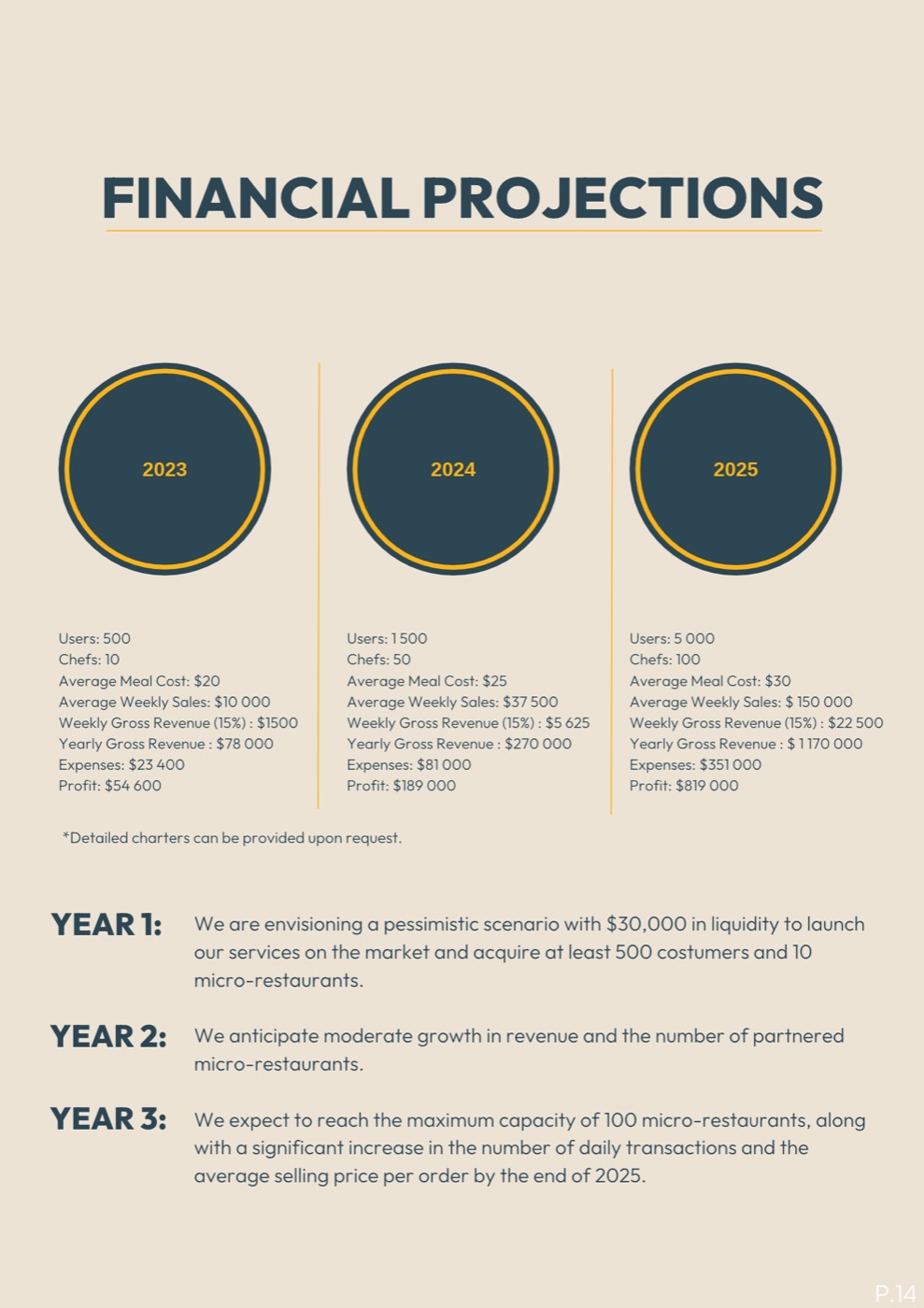
- Business case: co-wrote the pitch deck and investor prospectus: market sizing, competitive analysis, business model (15% commission) and financial projections.
- Go-to-market: co-built the phased launch plan (supply first, then demand) and owned the app launch stream.
- Growth marketing: ran paid campaigns on Google, Meta and TikTok with Google Search Console tracking, and generated 25,000 ad clicks to the website in two weeks on an $800 budget, which turned into about 100 newsletter sign-ups and 20 cooks signed up to start.
- Brand and communications: created the brand book, campaign visuals, social content and brand reel, and issued the launch press release (March 2023).
Related coursework, taken since: Feasibility studies · Business law · Marketing · Corporate financial management. Today I would turn the regulatory research into a formal feasibility study and stress-test the projections with sensitivity analysis.
Strategy & execution
Leading a remote build team
I recruited developers through Toptal and kept them aligned on one product vision. The roadmap and user stories lived in Zoho Sprints, and we worked in two-week sprints: plan, build, review, adjust.
Regulation as part of the product
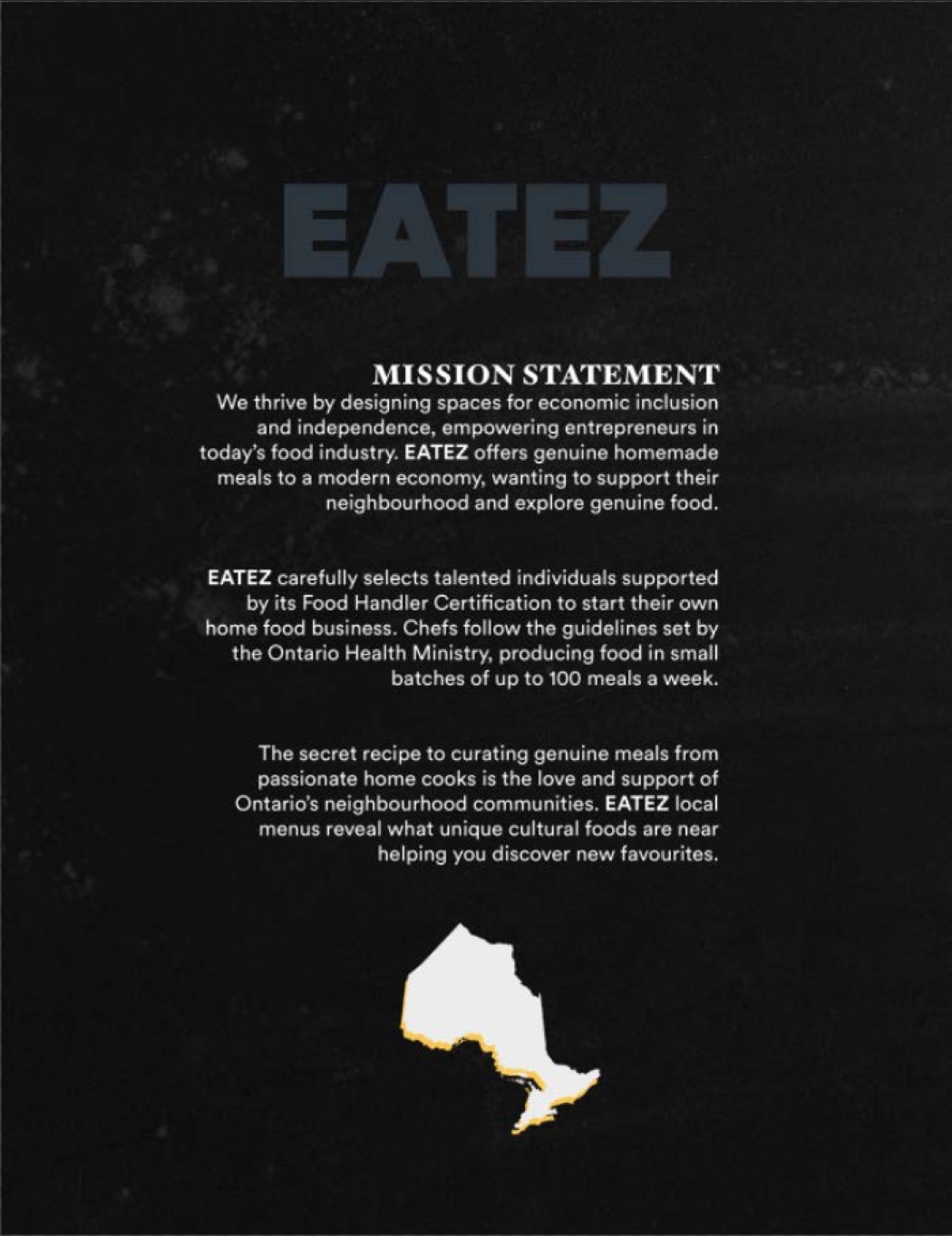
In a regulated market, policy is a product constraint. Cooks had to be approved by Eatez and hold a Food Handler Certification, and batches were capped at 100 meals a week under Ministry guidelines. Rather than work around the rules, the pilot proposal asked the province to partner on them, so food quality could be monitored instead of staying in an informal market.
Supply first, then demand
A marketplace fails if buyers arrive before sellers. The launch plan deliberately onboarded cooks before opening ordering:
| Phase | Focus | Key actions |
|---|---|---|
| Pre-launch | Awareness and subscribers | Website with mission and user experience; press, podcasts and partner organizations; SEO from earned media |
| Soft launch | Supply side | 5-email nurture sequence; cook sign-up, Eatez approval and food-handler certification; app open for sign-ups but not orders |
| Launch | Demand side | SMS reminder on launch day; ordering opens in spring, when people go out and try new things |
Each stream had a named owner across the founding team. Our launch materials featured IO Venture Path (operated by Invest Ottawa) and local chef Chef Phil as partners.
Scope cut for v1: pickup only
Delivery adds cost, logistics and food-safety risk. Version 1 was pickup only, timed for the summer, with delivery planned for winter to keep momentum once the core loop worked.
SEO and paid acquisition: from clicks to cooks
For the launch, I chose channels with the Bullseye Framework from Traction by Gabriel Weinberg and Justin Mares: brainstorm every channel, test the most promising cheaply, then double down on what works. I ran paid campaigns across Google, Meta and TikTok and tracked them with Google Search Console and each platform's analytics. In two weeks, $800 of ad spend brought 25,000 ad clicks to the website, about 3 cents per click. These are platform-reported link clicks, not unique visitors. Combined with SEO, that traffic converted into about 100 newsletter sign-ups and 20 cooks who signed up to start selling, the supply side the launch plan depended on.
Market, model and investor case
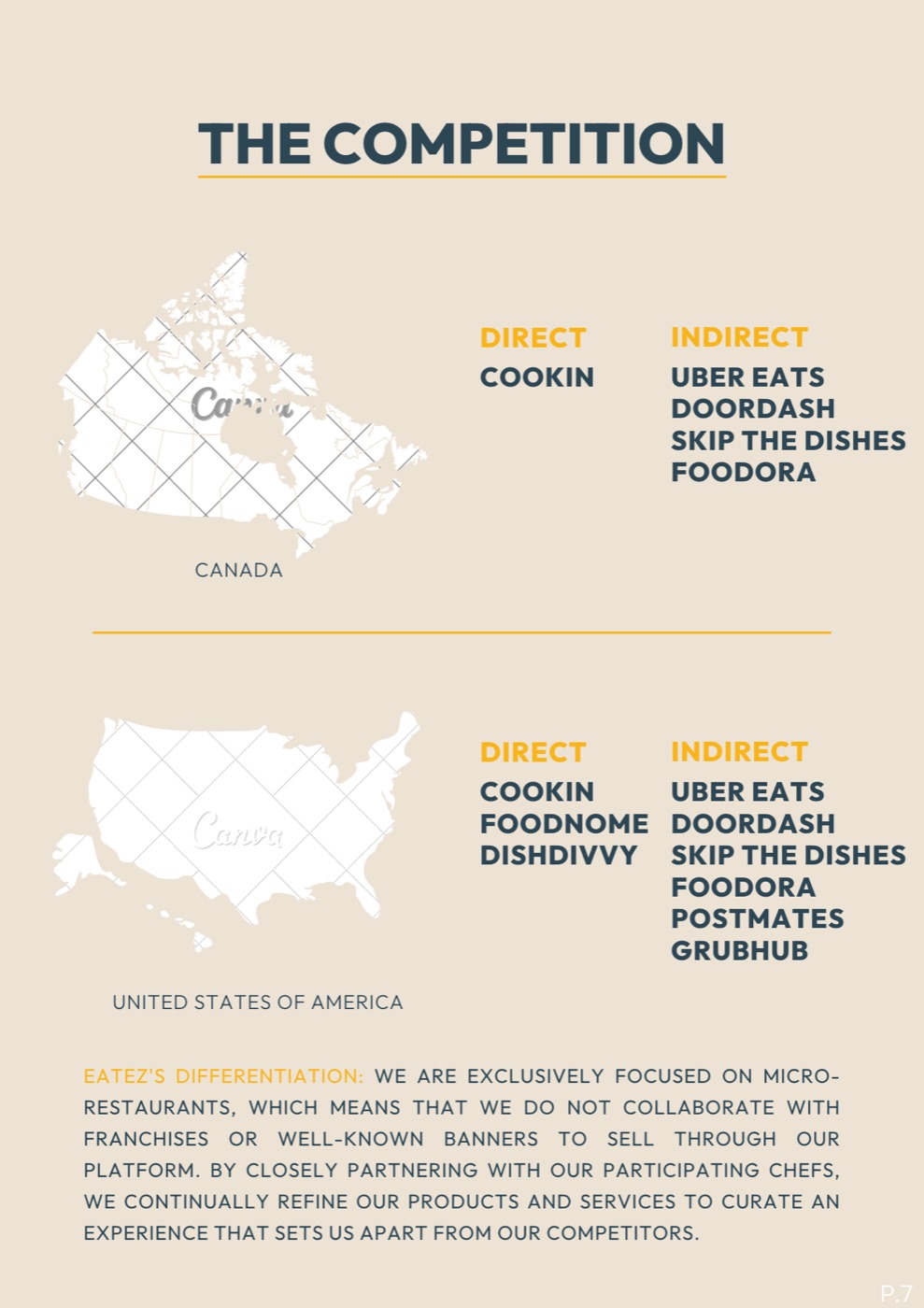
I co-wrote a pitch deck and a French-language investor prospectus. The competitive analysis separated direct competitors (home-cooked meal platforms such as Cookin, Foodnome and DishDivvy) from indirect ones (Uber Eats, DoorDash, SkipTheDishes). Eatez's differentiation: micro-restaurants only, with no franchises or big brands.
| Projection (2022) | 2023 | 2024 | 2025 |
|---|---|---|---|
| Partner cooks | 10 | 50 | 100 |
| Users | 500 | 1,500 | 5,000 |
| Platform revenue (15% commission) | $78K | $270K | $1.17M |
These were forward-looking projections in the 2022 prospectus, not actual results.
A complete brand system
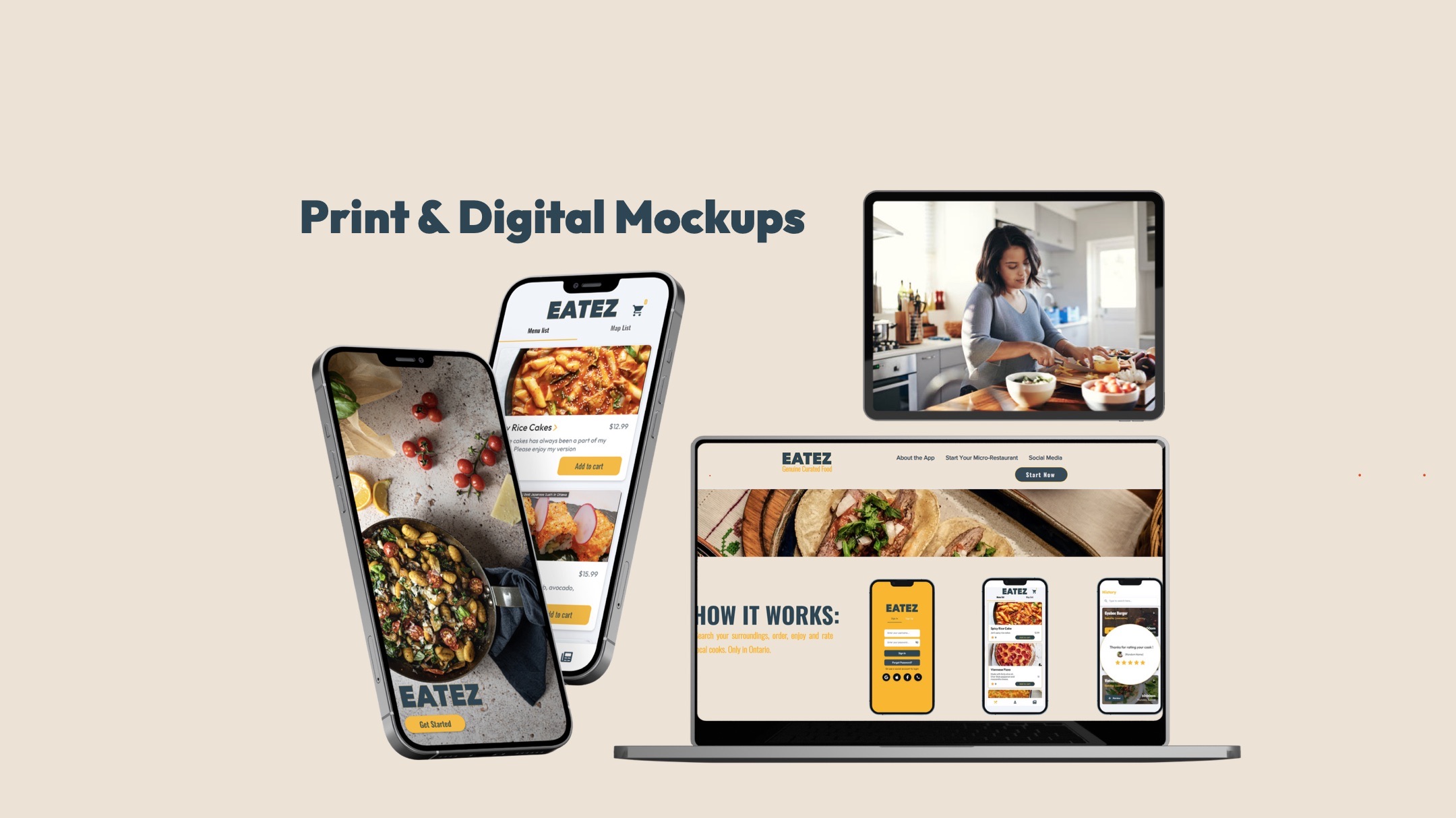
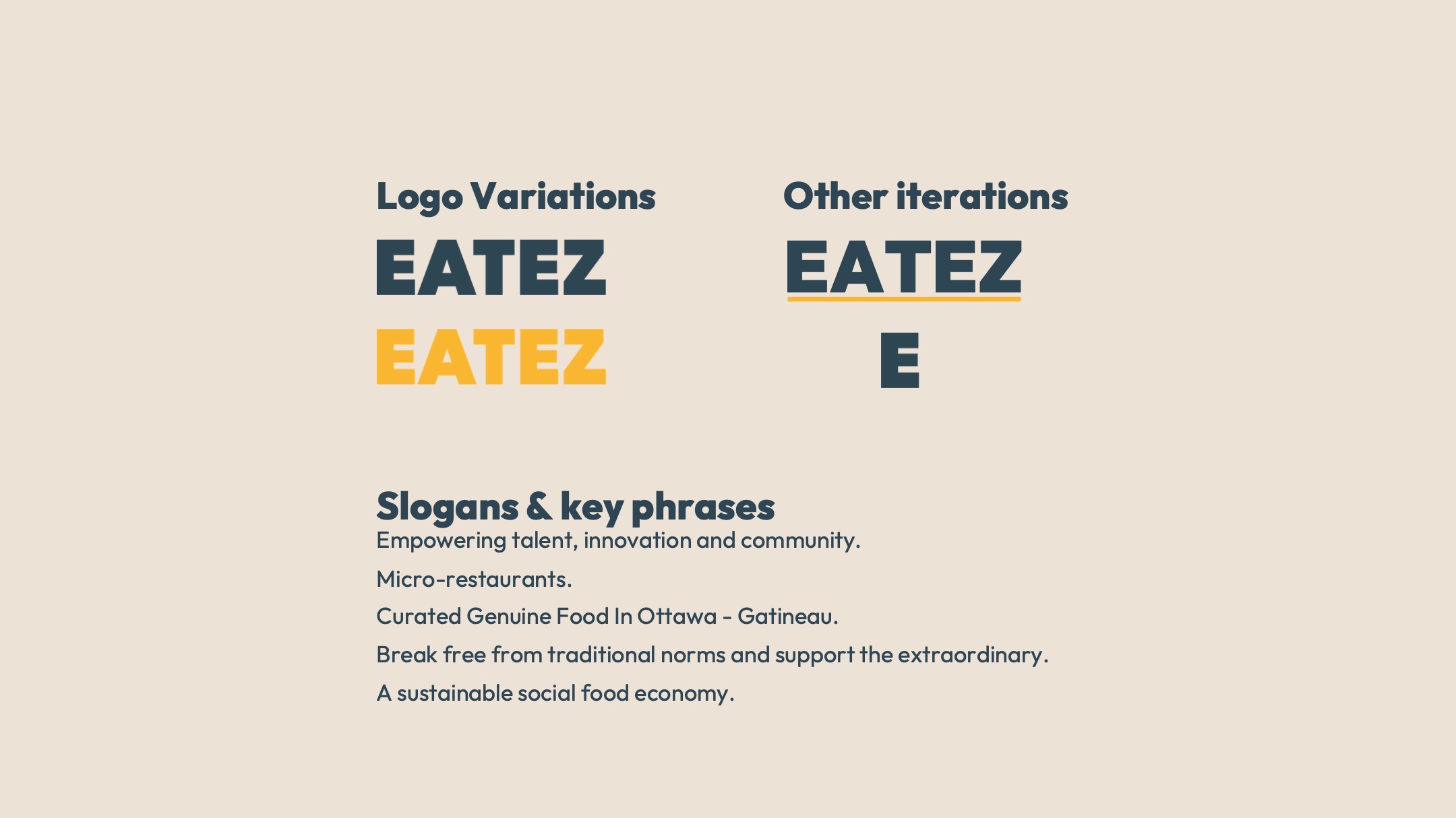
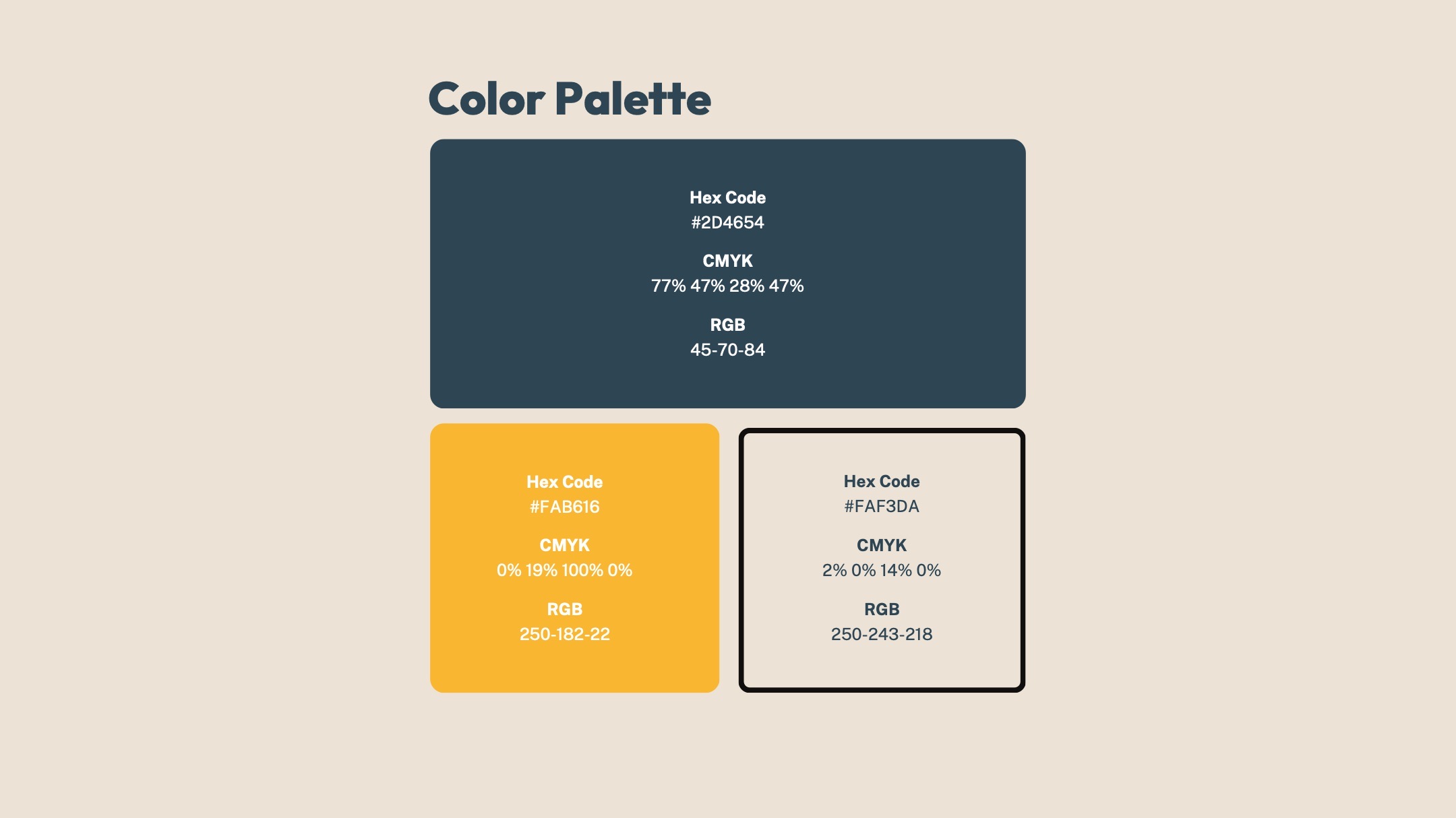
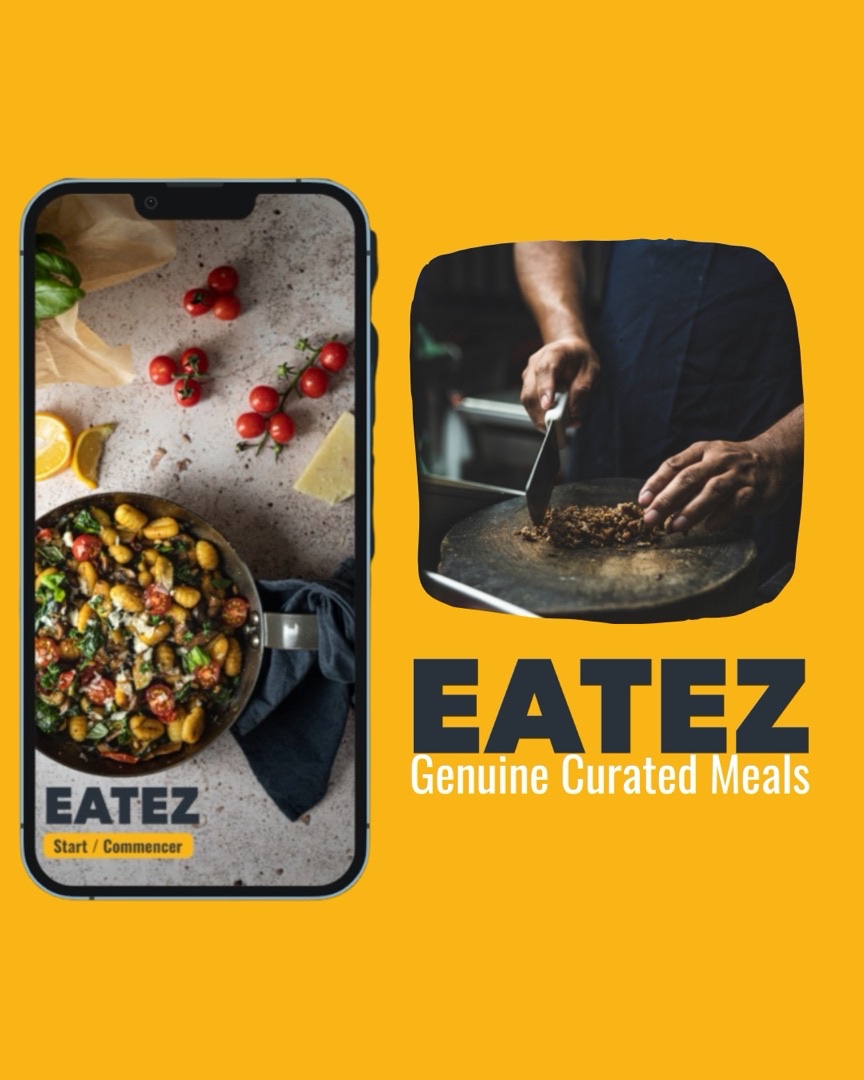
I developed a brand book so every touchpoint felt like one product: logo variations, a yellow-and-navy palette, a type system, a warm photography direction centred on the cooks, and print and digital mockups.
Marketing the cook, not just the dish
Positioning focused on the people behind the food: "we market our chefs first and their food second", building trust between neighbours who had never met.
Evidence
Results
| Milestone | Result |
|---|---|
| Pilot proposal to the Ministry | Submitted October 2022 |
| Website and app prototype | Built with a remote team in two-week sprints |
| Public launch announcement | Press release, March 2023 |
Eatez ended in 2023. Its full-meal model depended on Ontario widening what home kitchens can sell, which is what our pilot proposal asked for. What it gave me carried straight into my next products: leading a remote team, running sprints, and acquiring users cheaply.
Lessons learned
- Owning the vision is a job in itself. Eatez was my first time bringing hired developers into a product idea that lived in my head. I learned to turn that vision into a roadmap and stories people could execute, and to keep it consistent sprint after sprint.
- Cadence creates clarity. Biweekly sprints in Zoho Sprints gave everyone a predictable rhythm for priorities, reviews and trade-offs, and showed early when scope was drifting.
- Cheap tests beat big bets. The Bullseye Framework taught me to test channels with small budgets before scaling. That is how $800 turned into 25,000 ad clicks, about 100 subscribers and 20 cooks.
- In a regulated market, research comes first. Before building, I had to understand what micro-restaurants were legally allowed to sell. That research is what showed the opportunity had only recently become feasible, and it shaped the product: certified cooks, weekly batch limits, pickup first.